



Can You Softwash with an Xjet? A Complete Guide for Pressure Washing Professionals
|
|
Time to read 9 min
|
|
Time to read 9 min
Yes, you can softwash with an Xjet system, but with important limitations. The Xjet is primarily designed as a downstreaming alternative that applies chemicals at higher concentrations than traditional downstream injectors, making it suitable for many soft washing applications on single-story structures and lower surfaces. However, it's not a true dedicated softwash system, as it lacks the reach, flexibility, and precise chemical control that professional softwash pumps provide for multi-story buildings and complex applications.
For new pressure washing business owners, the Xjet represents a middle-ground solution that can handle light to moderate softwashing tasks effectively. While it won't replace a dedicated 12-volt softwash system for serious roof cleaning or tall building work, it offers significantly better chemical application capabilities than standard downstream injectors. Understanding when to use an Xjet for softwashing—and when to invest in dedicated equipment—is crucial for building an efficient and profitable pressure washing business.
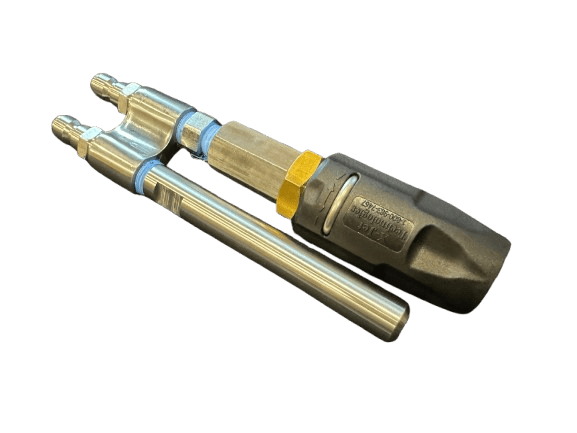
The Xjet is a unique chemical delivery system that revolutionized the pressure washing industry when it was introduced. Unlike traditional downstream injectors that draw chemical after the pump, the Xjet uses your pressure washer's water stream to create a venturi effect at the application point. This innovative design allows you to apply cleaning solutions at much higher concentrations—typically at ratios between 3
and 20, depending on the model and settings.
The system consists of a specialized nozzle assembly connected to your chemical container via a hose. As pressurized water flows through the Xjet valve, it creates suction that pulls chemical solution through the feed line, mixing it with water immediately before application. This means your pump and hoses only carry water, protecting your equipment from chemical exposure and extending its lifespan significantly.
The most popular models include the original M5 Xjet and the newer valve designs that offer improved flow rates and easier operation. Each model provides substantial advantages over basic downstream injection, delivering chemical concentrations strong enough for effective soft washing on many surfaces.
Before determining whether the Xjet meets your softwashing needs, it's essential to understand what true soft washing entails. Softwashing is a cleaning method that relies primarily on chemical action rather than mechanical pressure to remove organic growth, stains, and contaminants. This approach uses specialized cleaning solutions—typically containing sodium hypochlorite (bleach), surfactants, and water—applied at low pressure to avoid damaging delicate surfaces.
Professional softwashing typically requires three key capabilities: adequate chemical concentration at the surface, sufficient reach to access high areas safely from the ground, and low-pressure application that won't damage shingles, siding, or painted surfaces. The ideal system applies cleaning solutions at pressures below 500 PSI while maintaining enough volume to thoroughly saturate the surface and allow proper dwell time for the chemicals to work.
Most dedicated softwash systems use 12-volt pumps that can deliver chemical solutions 30 to 40 feet vertically, allowing operators to clean two and three-story homes from ground level. These systems offer precise control over chemical ratios through adjustable metering valves, and they apply solutions at very low pressures—typically between 60 and 150 PSI—making them ideal for sensitive surfaces like roof shingles and oxidized siding.
The Xjet excels in several softwashing scenarios that new pressure washing business owners commonly encounter. For single-story homes, fences, decks, and ground-level surfaces, the Xjet provides excellent chemical delivery without requiring significant investment in dedicated equipment. The system allows you to apply cleaning solutions at concentrations strong enough to effectively kill mold, mildew, and algae on vinyl siding, stucco, and painted surfaces.
One of the Xjet's most significant advantages is its simplicity and portability. You can easily transport the system between jobs, switch between chemical applications quickly, and maintain the equipment with minimal effort. Since you're only pumping water through your pressure washer, you reduce chemical exposure to your pump's internal components, potentially avoiding costly repairs associated with chemical damage to seals and valves.
The Xjet also offers cost-effective entry into chemical application services. For a few hundred dollars, you can substantially upgrade your chemical delivery capabilities compared to basic downstream injection. This makes it an attractive option for new business owners who want to expand their service offerings without making the $800 to $2,000 investment required for a quality dedicated softwash system.
Despite its capabilities, the Xjet has important limitations that every pressure washing professional should recognize. The most significant constraint is reach—the Xjet typically provides effective chemical application up to about 12 to 15 feet vertically, depending on your pressure washer's specifications and the specific Xjet model you're using. This limitation makes it unsuitable for cleaning second-story siding, high gable ends, or roofs on most structures without using ladders or lifts.
The system's reliance on your pressure washer's operation also means you'll consume significantly more water compared to dedicated softwash pumps. While a 12-volt system might use 1.5 to 2 gallons per minute, your Xjet requires running your pressure washer at 3 to 5 GPM or more, increasing water consumption and potentially limiting your ability to work at locations without adequate water supply. This higher flow rate also means you'll use more chemical solution to maintain proper ratios.
Chemical ratio adjustment with the Xjet is less precise than dedicated systems with adjustable metering valves. While you can modify ratios by changing tips, adjusting ball valves, or diluting your solution, you don't have the same level of fine-tuned control that professional softwash pumps provide. For applications requiring exact chemical strengths—like delicate painted surfaces or specific manufacturer recommendations—this limitation can prove challenging.
When deciding whether the Xjet meets your softwashing needs, understanding how it compares to dedicated systems helps you make informed equipment decisions. Dedicated 12-volt softwash systems deliver superior vertical reach, often accessing areas 30 to 40 feet high with appropriate nozzles and pressure. This capability allows you to clean most residential structures completely from ground level, dramatically improving safety and efficiency.
Dedicated systems also provide better chemical economy. Because they apply solutions at lower volumes (1.5 to 2.5 GPM typically), you use less chemical per job while maintaining effective coverage. The precise metering valves on quality softwash systems let you dial in exact ratios on the fly, adapting to different surfaces, contamination levels, and customer requirements without returning to your chemical containers.
However, dedicated softwash systems require more substantial investment, additional maintenance, and separate equipment to transport. You'll need to maintain battery charges, monitor pump seals, and dedicate trailer or truck space to the system. For new pressure washing businesses just starting out, this investment may not be justified until you've built a steady client base for soft washing services.
The Xjet shines in specific softwashing applications that align with its capabilities. Single-story home washing represents perhaps the ideal use case—you can effectively apply cleaning solutions to vinyl or aluminum siding, remove organic growth, and rinse thoroughly without the reach limitations becoming problematic. The system works exceptionally well for cleaning fences, decks, and patio surfaces where you need strong chemical application but don't face height challenges.
Commercial applications like cleaning dumpster pads, parking lots with heavy oil stains, or building foundations also suit the Xjet's strengths. These ground-level applications benefit from the strong chemical concentrations the system delivers while avoiding reach limitations. Many pressure washing professionals use the Xjet for pre-treating concrete surfaces before pressure washing, applying degreasers to fleet vehicles, or cleaning agricultural equipment.
For business owners serving primarily single-story neighborhoods or focusing on ground-level commercial work, the Xjet might provide all the softwashing capability you need. However, if your market includes numerous two-story homes, you regularly encounter roof cleaning requests, or you plan to specialize in soft washing services, you'll eventually need to invest in dedicated equipment to serve these markets effectively.
If you're using an Xjet for softwashing, several techniques can maximize its effectiveness. First, always mix your chemical solutions at appropriate concentrations in your container, accounting for the Xjet's dilution ratio. For house washing with sodium hypochlorite, many professionals start with 50-75% bleach in their chemical container, knowing the Xjet will dilute this to an effective 1-3% at the surface depending on settings.
Choose appropriate tips for your application—larger orifice tips provide higher flow and better coverage for house washing, while smaller tips offer more reach when you need to access slightly higher areas. Experiment with different tip combinations to find what works best with your specific pressure washer setup and the cleaning challenges you regularly encounter.
Manage your technique to compensate for the system's characteristics. Apply chemical solutions from bottom to top to prevent streaking, allow adequate dwell time for the chemicals to work (typically 10-15 minutes for house washing), and maintain consistent coverage patterns. Since the Xjet uses more water than dedicated systems, be prepared with adequate water supply—either through customer connections or water tanks that can support longer application times.
For new pressure washing business owners, equipment decisions should align with your business strategy and market demands. If you're just starting out and want to offer house washing services alongside concrete cleaning and basic pressure washing, the Xjet provides an excellent entry point. It allows you to competitively bid on single-story homes and deliver professional results without significant equipment investment.
As your business grows and you identify steady demand for softwashing services—particularly for taller structures or roof cleaning—plan to invest in dedicated equipment. Many successful pressure washing professionals run both systems: using the Xjet for ground-level applications and quick jobs while deploying their 12-volt system for comprehensive house washing on multi-story structures and specialized roof cleaning services.
Consider your market demographics when making equipment decisions. Markets dominated by single-story ranch homes and ground-level commercial properties may never require dedicated softwash equipment beyond an Xjet. Conversely, areas with numerous two and three-story homes, or markets where roof cleaning represents a significant revenue opportunity, justify earlier investment in dedicated systems.
Regardless of which chemical application system you use, safety must remain your top priority. When softwashing with an Xjet, always wear appropriate personal protective equipment including chemical-resistant gloves, safety glasses, and protective clothing. The concentrated chemicals you're handling can cause serious skin and eye injuries if you're not properly protected.
Pre-wet and protect all vegetation, landscaping, and delicate surfaces before applying cleaning solutions. The chemical concentrations delivered by the Xjet can damage or kill plants if you don't take proper precautions. Use tarps, plastic sheeting, and thorough watering to protect valuable landscaping, and always rinse plants immediately if they contact cleaning solutions.
Understand the chemicals you're using and their proper handling requirements. Sodium hypochlorite requires specific mixing procedures—always add chemical to water, never water to chemical—and proper storage away from heat and incompatible substances. Maintain proper ventilation when mixing chemicals, and never combine sodium hypochlorite with acids or ammonia-based products, as this creates dangerous gases.
The Xjet absolutely can be used for softwashing, and it represents a practical, cost-effective solution for many pressure washing businesses, especially those just starting out or focusing on specific market segments. Its ability to deliver concentrated cleaning solutions at better ratios than downstream injection makes it suitable for single-story homes, ground-level commercial work, and numerous other applications where its reach limitations don't present challenges.
However, honest assessment of your market, growth plans, and service offerings should guide your equipment decisions. If you're regularly turning down work on two-story homes or roof cleaning jobs, that lost revenue quickly exceeds the cost of dedicated softwash equipment. The Xjet works best as either an entry-level solution while you build your business or as a complement to dedicated systems for specific applications.
Ultimately, successful pressure washing businesses match their equipment to their market demands and service capabilities. Start with the Xjet if it suits your current needs, but remain flexible and willing to invest in dedicated equipment as your business grows. By understanding both the capabilities and limitations of every tool in your arsenal, you'll build a more efficient, profitable operation that can serve diverse customer needs while maintaining the quality standards that generate referrals and repeat business.
Products Featured In This Blog
Yes and no. The Xjet requires you to know your machine and its GPM and to match the machine to your Xjet. If your machine isn't matching the Xjets rated GPM, your experience will be subpar.