




How to Clean a Dirty House Exterior Without Pressure Washing
|
|
Time to read 15 min
|
|
Time to read 15 min
A grimy house exterior can make an otherwise beautiful home look neglected. Green algae streaks on the siding, black mildew creeping up the north-facing walls, and a dingy gray film over what used to be bright white trim—these are problems nearly every homeowner faces eventually. The instinct is to grab a pressure washer and blast it all away.
But here's what years of exterior cleaning experience teaches you: high-pressure water is often the wrong tool for the job. It can carve grooves into wood, force water behind siding, strip paint, and crack the seal around windows. The good news is that you can get a deeper, longer-lasting clean without ever touching a pressure washer.
This guide walks you through the proven, professional-grade method for cleaning your home's exterior safely—using low pressure, the right chemistry, and a smart order of operations. Whether you're tackling vinyl siding, brick, stucco, or a weathered deck, you'll have everything you need to do it yourself and get results that look professionally done.
Before we get into methods, it helps to understand why so many professionals have moved away from high-pressure cleaning on home exteriors.
Pressure washing relies on mechanical force—essentially blasting dirt off a surface with concentrated water. The problem is that this force doesn't kill the organisms causing most exterior stains. Algae, mold, mildew, and lichen are living growths. When you pressure wash them, you knock the visible surface layer off, but the roots remain. Within weeks or months, the green and black streaks return, often worse than before.
The alternative is a method called softwashing. Instead of relying on pressure, softwashing uses cleaning solutions—typically a diluted sodium hypochlorite (bleach) mixture combined with a surfactant—to kill organic growth at the source. You apply the solution at low pressure, let the chemistry do the work, and rinse it away with a regular garden hose.
The results speak for themselves. A softwashed surface stays clean far longer because you've actually killed the algae and mold rather than just relocating it. You also avoid the property damage that comes with 3,000 PSI of water aimed at your siding.
So when people ask what the alternative to pressure washing a house is, the professional answer is almost always softwashing. It's safer, more effective, and entirely achievable for a motivated homeowner.
You don't need expensive equipment to clean your home exterior yourself. The softwash approach works with tools most homeowners already own or can buy inexpensively.
Here's the basic toolkit for a no-pressure exterior cleaning:
A garden hose with an adjustable nozzle for wetting surfaces and rinsing. A standard hose delivers plenty of flow for rinsing softwash solution.
A pump sprayer or garden sprayer (1 to 2 gallons) to apply your cleaning solution evenly. For larger homes, a battery-powered sprayer saves your hands and forearms.
A soft-bristle brush on an extension pole for any spots that need light agitation, like textured stucco or stubborn mildew patches.
A bucket for mixing solution and for spot-cleaning by hand.
Personal protective equipment: safety glasses, gloves, and old clothes. Bleach-based solutions will discolor fabric.
The method itself is straightforward. You apply a cleaning solution to the dirty surface, give it time to dwell and break down the grime and kill the organic growth, lightly agitate any stubborn areas, and then rinse with your garden hose. No high pressure required.
This approach works on virtually every common exterior material—vinyl and aluminum siding, painted wood, fiber cement board, brick, stucco, and even composite materials. The key variable is the strength of your cleaning solution, which you'll adjust based on the surface and how heavy the staining is.
For a homeowner cleaning their house exterior for the first time, the process looks like this:
Protect your landscaping. Wet down nearby plants, shrubs, and grass before you start, and rinse them again afterward. Bleach solutions can harm vegetation if left concentrated on leaves.
Work in the shade. Cleaning solution evaporates quickly in direct sun, which reduces dwell time and can leave streaks. Follow the shade around your house or clean on an overcast day.
Wet the surface lightly if it's bone dry and hot, though many pros apply solution directly to keep the chemistry strong.
Apply your solution from the bottom up. This prevents clean streaks on dirty surfaces, which are hard to remove later.
Let it dwell for several minutes—usually 5 to 10—without letting it dry completely.
Rinse from the top down with your garden hose.
It really is that simple. The difference between an average result and a professional one comes down to the quality of your cleaning solution and how well you control dwell time—both of which we'll cover next.
The cleaning solution is where the real work happens. Pressure provides force; chemistry provides results. For most exterior surfaces, the best solution is a properly mixed softwash blend built around three components.
Sodium hypochlorite (bleach) is the active ingredient that kills algae, mold, mildew, and bacteria. Most professionals use a 12.5% sodium hypochlorite concentrate (often called "pool shock" or commercial-grade bleach), then dilute it with water to the appropriate strength. For light house washing, a mix as low as 1% to 2% sodium hypochlorite is often plenty.
Water dilutes the bleach to a safe, effective working concentration. Getting the ratio right matters—too strong and you risk damaging plants and finishes, too weak and the stains won't release.
A surfactant is the ingredient most beginners overlook, and it's the one that separates good results from great ones. A surfactant does several jobs at once. It helps the solution cling to vertical surfaces instead of running straight off, which dramatically increases dwell time. It breaks the surface tension so the cleaner penetrates into porous materials and grime. And it boosts the overall cleaning power of the bleach.
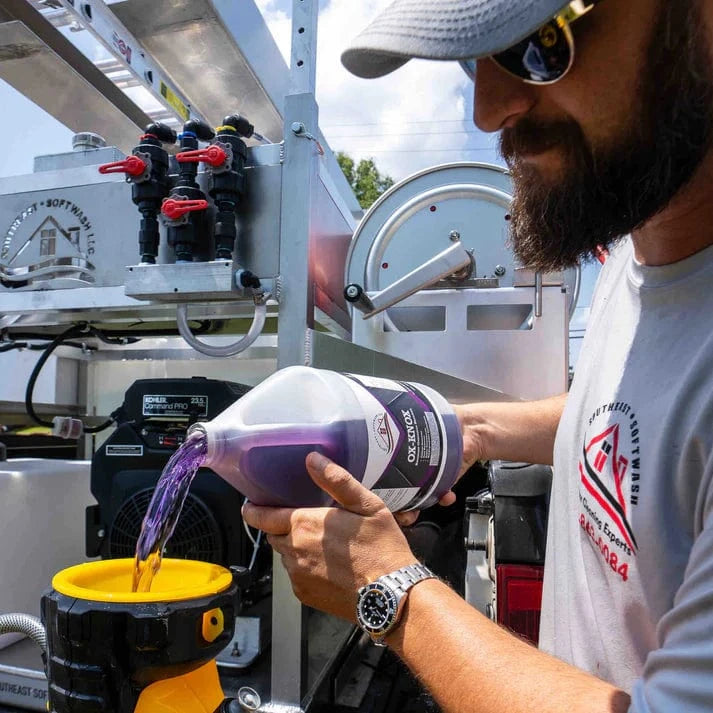
This is exactly where a product like Southern Drawl Surfactant earns its place in the mix. It's a concentrated bleach additive made specifically for softwash applications. Adding it to your bleach-and-water solution makes the cleaner stick longer, work harder, and clean more thoroughly across roofs, siding, concrete, and more. As a bonus, it carries a fresh citrus scent that cuts the harsh chlorine smell most people associate with bleach cleaning—a small thing that makes the whole job more pleasant.
Without a surfactant, your solution sheets right off the wall and you waste product chasing streaks. With one, the solution hangs on the surface, does its work, and rinses clean.
Plenty of homeowners want a DIY approach, and you can absolutely mix an effective exterior cleaner yourself. The best homemade exterior house cleaner is a variation on the professional softwash recipe, scaled for home use.
A reliable general-purpose mix looks like this:
1 gallon of household bleach (6% sodium hypochlorite)
1 gallon of water
A few ounces of a quality surfactant or, in a pinch, a squirt of dish soap
Dish soap can work as a basic surfactant substitute, but it has real drawbacks. It tends to foam excessively, which makes rinsing harder, and it isn't formulated to stay stable in a bleach solution. A purpose-built surfactant like Southern Drawl is engineered to be compatible with sodium hypochlorite, won't break down the bleach's effectiveness, and provides far better cling and coverage. For a one-off small job, dish soap is fine; for cleaning your whole house, a real surfactant pays for itself.
You'll also see recipes built around vinegar, baking soda, or oxygen bleach for people who want to avoid chlorine. These can help with light surface dirt and are gentler on plants. The honest truth is that they don't kill algae and deep-set mildew nearly as effectively as a sodium hypochlorite solution. For organic green and black staining—the most common exterior problem—a bleach-based softwash remains the most effective option.
Adjust your mix to the surface. Painted surfaces and delicate finishes call for a weaker dilution. Heavily stained concrete or a roof full of algae can handle a stronger blend. When in doubt, start weaker—you can always reapply.
A common question is what the correct order of cleaning is, and the answer matters more than people expect. Cleaning in the wrong sequence means you'll redirty surfaces you've already finished and double your work.
The guiding principle is simple: work from top to bottom, and clean the dirtiest, highest surfaces first. Gravity moves dirt and runoff downward, so anything you clean low will get filthy again when you wash the areas above it.
Here's the order a professional follows on a typical home:
1. The roof (if it needs it). Roof algae and black streaks should be addressed first because all that runoff flows down onto your siding. We've covered the specifics of softwashing a roof in more detail elsewhere, but the principle is the same: low pressure, the right solution, careful rinsing.
2. Gutters and fascia. These collect grime and "tiger striping" and sit above the siding.
3. The siding, walls, and trim. Work one section at a time, bottom to top within each section to avoid streaks, then rinse top to bottom.
4. Windows and doors. Clean these after the walls so siding runoff doesn't spot them.
5. Porches, decks, and steps. Horizontal surfaces people walk on.
6. Driveways, walkways, and concrete. Ground-level surfaces come last because every rinse from above ends up here.
Following this sequence means you never re-soil finished work. Within each stage, the bottom-up application and top-down rinse routine keeps everything streak-free.
One practical tip: tackle the whole project on a single overcast day or split it across a couple of cool mornings. You want consistent shade and moderate temperatures, both of which preserve your solution's dwell time and prevent premature drying.
Decks deserve special attention because they're one of the surfaces most often damaged by pressure washing. High pressure raises the wood grain, splinters softwood like pine and cedar, and gouges composite decking. People reach for a pressure washer assuming it's the only option, but there's a better substitute.
To clean a deck without a pressure washer, use the same softwash principle adapted for a horizontal wood surface:
Sweep the deck and clear furniture, planters, and debris.
Wet down surrounding plants and any grass at the deck's edge.
Apply a softwash solution mixed for wood—a milder dilution than you'd use on concrete. The bleach kills the mildew and algae that make decks slippery and gray; the surfactant helps it penetrate the grain.
Let it dwell for 5 to 10 minutes, keeping the surface wet.
Agitate with a stiff broom or deck brush along the direction of the wood grain. This lifts ground-in grime without tearing up the surface.
Rinse thoroughly with a garden hose.
This method brightens the wood, removes the slippery biofilm, and prepares the surface beautifully if you plan to stain or seal afterward—something pressure washing actually interferes with, because it leaves the wood fuzzy and raised.
A surfactant earns its keep here too. On a flat deck, you want the solution to sit and soak rather than pool unevenly. The improved coverage from a product like Southern Drawl Surfactant means more consistent cleaning across the whole surface, including the textured grain where mildew loves to hide.
For composite and PVC decking, use an even gentler dilution and always check the manufacturer's care guidelines, but the no-pressure approach is ideal—it cleans without the risk of permanently scarring the material.
Anyone who's hired professional cleaners notices the same thing: the place doesn't just look clean, it smells clean. There's a reason for that, and you can replicate it outdoors too.
What professional cleaners use to make a house smell so good usually comes down to a combination of effective cleaning agents that eliminate odor-causing buildup, plus pleasant fragrance carriers. Pros rely on products formulated with appealing scents so the finished space smells fresh rather than chemical.
If you've wondered what three ingredients make a house smell good, the classic combination is citrus, essential oils (like lemon, lavender, or eucalyptus), and a clean-smelling base such as a mild surfactant or natural cleaner. Citrus in particular is a favorite because it reads as "fresh and clean" to almost everyone and naturally cuts through grease and odor.
This matters for exterior cleaning because bleach-based softwash solutions have a strong chlorine smell that lingers around your home during and after the job. That's another quiet advantage of choosing a surfactant with a built-in fragrance. Southern Drawl Surfactant's fresh citrus scent helps mask the harsh bleach odor, so your cleaning day is more pleasant and your home's exterior smells clean rather than like a swimming pool when you're done. It's a small detail, but it's the kind of thing that makes the difference between a chore you dread and one you don't mind doing.
This product is a bleach additive to aid in the cleaning process. Used for all softwash applications including roof cleaning, house washing, concrete treatment and more... This is a concentrate that mixes at a 15 gal of water to 1 gallon jug ratio.
Even with the right method, a few common errors can undermine your results or create new problems. Here's what to watch for and how to steer clear.
Using too much pressure out of habit. If you do own a pressure washer and decide to use it for rinsing, keep it on the widest, lowest setting and stay well back from the surface. The whole point of softwashing is letting chemistry replace force. Blasting away at close range reintroduces every risk you're trying to avoid.
Skipping the surfactant. Mixing bleach and water alone is the most common beginner mistake. The solution runs straight off vertical surfaces, dries too fast, and never gets enough dwell time to work. You end up using far more product for worse results. A proper surfactant is the cheapest upgrade you can make to your cleaning solution.
Letting the solution dry on the surface. Bleach solution that dries before you rinse can leave streaks, residue, and even light etching on some surfaces. Always work in shade, keep the area wet during the dwell time, and rinse before evaporation sets in.
Ignoring your landscaping. Failing to pre-wet and post-rinse plants is a costly mistake that can leave you with dead shrubs and scorched grass. Saturate vegetation before you start, cover sensitive plants if you can, and rinse everything generously when you finish.
Mixing the solution too strong. More bleach isn't always better. An overly concentrated mix can strip paint, lighten colored surfaces, damage plants, and harm wood. Start with a milder dilution and increase only if the stains resist. You can always reapply; you can't undo a bleached patch of siding.
Working top to bottom when applying. Applying solution from the top down causes clean streaks to run over still-dirty surfaces below, and those streaks are stubborn to remove. Apply from the bottom up, then rinse from the top down.
Cleaning in direct sun or high heat. Heat accelerates evaporation, kills your dwell time, and increases streaking. Cool, overcast conditions are ideal.
Forgetting protective gear. Bleach solutions will ruin clothing, irritate skin, and harm eyes. Safety glasses and gloves are non-negotiable, and you'll thank yourself for wearing old clothes.
Once you've mastered the basics, these professional habits will sharpen your results and make the whole job faster and easier.
Match your dilution to the surface, not the stain. Pros keep a simple mental chart: weaker mixes for paint, wood, and delicate finishes; stronger mixes for concrete, masonry, and roofs. Knowing your surface first prevents the most common damage.
Maximize dwell time with a quality surfactant. The single biggest lever on cleaning performance is how long your solution stays wet and active on the surface. A surfactant that clings well, like Southern Drawl, lets the chemistry keep working instead of dripping off in seconds. Professionals practically never spray bare bleach for this reason.
Use a downstream injector or pump sprayer for even coverage. Consistent application beats heavy spots and missed patches. A simple pump sprayer with a fan tip gives you even, controllable coverage for a DIY job.
Pre-treat the worst areas first. North-facing walls, shaded corners, and areas under trees collect the heaviest algae growth. Hit those spots first so they get the longest total dwell time, then come back and reapply if needed.
Keep the surface wet during dwell. If you notice solution starting to dry before you've rinsed, mist it lightly to keep it active. This is especially important on hot days and dark surfaces.
Rinse thoroughly and from the right angle. A full, generous rinse removes all residue. Rinse top to bottom and pay attention to crevices, window frames, and trim where solution can collect.
Plan around the weather. Overcast, cool, calm days are ideal. Avoid windy conditions that blow overspray onto plants, cars, and neighboring property, and avoid days with rain in the immediate forecast that could rinse your solution before it's done working.
Buy concentrate and dilute as needed. Concentrated products give you control over strength and cost far less per job than ready-to-use bottles. A concentrated surfactant added to your own bleach-and-water mix is how professionals keep their per-house cost low while maintaining results.
Throughout this guide, one theme keeps surfacing: the chemistry of your cleaning solution determines your results far more than the equipment you use. You can clean a dirty house exterior beautifully with nothing more than a garden hose and a pump sprayer—but only if your solution actually clings to the surface and stays active long enough to kill the algae, mold, and mildew causing the stains.
That's the exact problem Southern Drawl Surfactant is built to solve. It's a concentrated bleach additive designed specifically for softwash applications, and it addresses the weaknesses of a plain bleach-and-water mix directly.
By improving how your solution sticks to vertical and textured surfaces, it dramatically increases dwell time, which is the number one factor in cleaning performance. It boosts the overall effectiveness of the bleach so you get a deeper clean with less product. And it works across the full range of exterior surfaces discussed here—roofs, siding, concrete, decks, and more—so you only need one additive for your whole house.
Compared to common alternatives, the advantages are practical. Dish soap foams too much and isn't formulated to stay stable in bleach. Plain bleach and water sheets right off the wall and wastes product. Ready-to-use commercial cleaners cost far more per job and give you no control over strength. A concentrated, bleach-compatible surfactant solves all three problems at once—better cling, full compatibility, and a low cost per house because you dilute it yourself.
The fresh citrus scent is a genuine bonus rather than a gimmick. Anyone who's spent an afternoon spraying bleach solution knows how harsh the chlorine smell gets. Cutting that odor makes the work more pleasant and leaves your home's exterior smelling clean.
Who should use it? Any homeowner serious about cleaning their house exterior without a pressure washer, anyone tackling roof or concrete cleaning, and DIYers who want professional-level results without buying professional equipment. If you're cleaning your whole home, a deck, a driveway, or all of the above, a surfactant belongs in your mix.
Who might not need it? If you're spot-cleaning a tiny area or wiping down a single small surface, a squirt of dish soap will get you through. The surfactant earns its value on real jobs—full walls, roofs, decks, and concrete—where cling and dwell time make a visible difference.
To use it effectively, add it to your diluted bleach-and-water solution according to the product's recommended ratio, apply with a pump or battery sprayer from the bottom up, give it time to dwell in the shade, and rinse thoroughly from the top down. That simple routine, powered by the right chemistry, is what produces results that look professionally done.
Cleaning a dirty house exterior without a pressure washer isn't just possible—it's often the smarter choice. High-pressure water damages surfaces, forces water where it doesn't belong, and only knocks the surface layer off the algae and mildew that cause most staining. Softwashing does the opposite: it kills the growth at the source with the right chemistry, applied gently, and rinsed away with a regular garden hose.
The essentials are easy to remember. Use low pressure and let your cleaning solution do the work. Build that solution around bleach, water, and a quality surfactant. Work from top to bottom and clean the highest, dirtiest surfaces first. Protect your plants, work in the shade, and never let the solution dry before you rinse. Match your dilution to each surface, and start milder than you think you need.
Above all, don't underestimate the surfactant. It's the difference between a solution that drips off uselessly and one that clings, penetrates, and delivers a clean that lasts. Southern Drawl Surfactant brings that performance to every surface on your property—roof, siding, deck, and concrete—with a fresh citrus scent that makes the whole job more pleasant.
Follow the method in this guide, invest in the right solution, and you'll get a deeper, longer-lasting clean than any pressure washer could deliver—all with tools you can hold in one hand.