



How to Start Pressure Washing Without Building Your Own Skid
|
|
Time to read 14 min
|
|
Time to read 14 min
There's a meaningful difference between a homeowner's weekend pressure washer and a commercial rig that can run for hours without complaint. If you're building a business, you're assembling a system, not just buying a machine.
Here's what a professional setup actually includes:
A commercial-grade pressure washer — gas-powered, with enough pressure and flow to work efficiently.
A water tank — so you're not dependent on the customer's spigot, which is often weak, missing, or inconveniently located.
A pump and hoses — including a high-pressure hose, a supply hose, and quick-connect fittings.
Spray guns, wands, and nozzles — different tips for different jobs.
A surface cleaner — a spinning attachment that cleans flatwork evenly and dramatically faster than a wand.
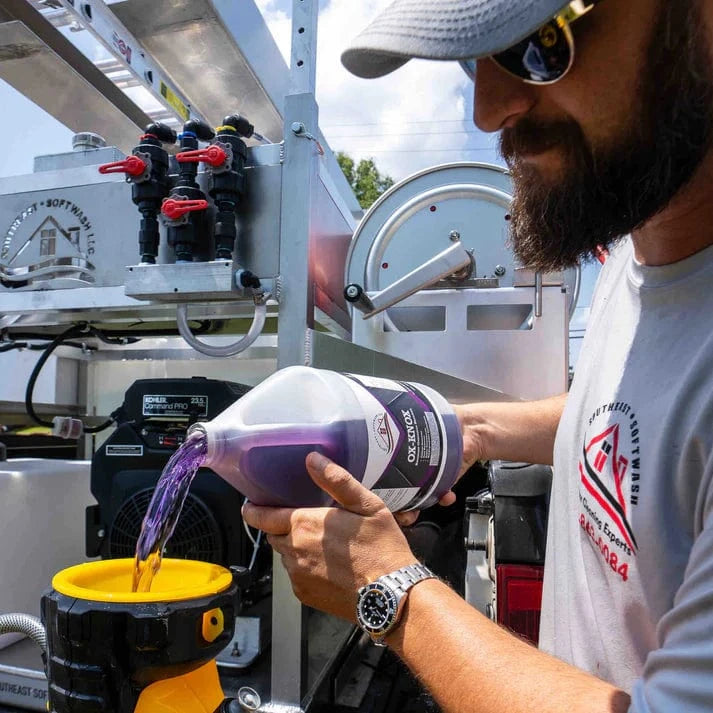
Chemicals and a soap injection system — for house washing and stain removal.
A transport skid or frame — to mount everything securely in your truck bed or trailer.
The tank and skid are what separate serious operators from beginners. A machine alone limits you to jobs with reliable water access. A tank frees you to work anywhere and to run your equipment consistently without the pressure drops that come from a weak residential faucet.
For a business, "beginner" shouldn't mean "cheap consumer model." Those electric units from the hardware store are fine for a homeowner cleaning a patio twice a year, but they'll overheat and disappoint you on a paying job.
The best starting point for a professional is a gas-powered pressure washer producing around 3,000 to 4,000 PSI with a flow rate of 3.5 to 4 gallons per minute (GPM). Look for a well-known engine brand, a quality triplex pump rather than an axial pump, and easy access to replacement parts. A triplex pump costs more upfront but lasts far longer under daily commercial use, which makes it cheaper over time.
Flow rate matters as much as pressure. Higher GPM rinses faster and lets you cover more square footage per hour, which directly increases how much you earn per day. Two machines with the same PSI but different GPM are not equal, and beginners consistently underestimate this.
PSI (pounds per square inch) measures the force of the water stream, and the right number depends entirely on the job:
1,300–1,900 PSI — light residential work, cars, outdoor furniture. Too weak for professional efficiency.
2,000–2,800 PSI — moderate cleaning like decks, fences, and siding.
3,000–4,000 PSI — professional flatwork, concrete, driveways, and commercial cleaning.
4,000+ PSI — heavy industrial applications and paint or coating prep.
For most pressure washing businesses, a machine in the 3,000 to 4,000 PSI range hits the sweet spot. It's powerful enough for tough concrete stains yet controllable enough for softer surfaces when you switch to a wider nozzle or step back from the surface.
Remember that pressure is only part of the equation. You control cleaning power through your nozzle selection and your distance from the surface, not just the machine's maximum output. A 4,000 PSI machine used carelessly will gouge wood and etch concrete, while the same machine used correctly cleans safely.
Now we arrive at the question that trips up nearly every new operator. Once you understand you need a tank, a pump, hoses, reels, and a frame to hold it all in your truck, the natural next thought is: should I just build the skid myself?
Plenty of people try. If you search for how to make a pressure washing skid, you'll find a familiar list of steps.
A DIY skid build generally involves:
Sourcing a frame — welding steel or bolting together an aluminum frame sized to fit your truck bed.
Selecting and mounting a water tank — commonly 100 to 325 gallons, secured so it doesn't shift when full.
Plumbing the water system — connecting the tank to the pump with the correct fittings, valves, and a bulkhead that won't leak under vibration.
Mounting the pressure washer and engine — bolted down and positioned for airflow and access.
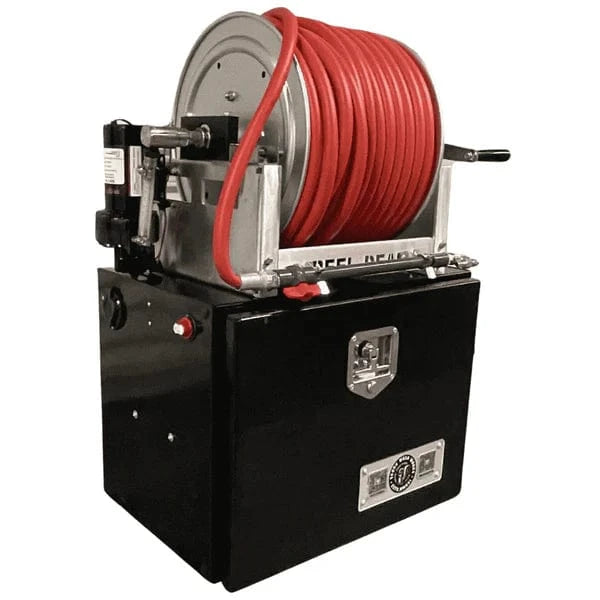
Adding hose reels — for both the pressure hose and supply lines.
Wiring, chemical injection, and finishing — plus balancing the load so the rig is safe to drive.
On paper it's a weekend project. In reality, it rarely is.
The problems show up quickly. A full 275-gallon tank weighs over a ton, and mounting it wrong is genuinely dangerous when you're driving. Steel frames rust, especially with constant exposure to water and cleaning chemicals. Plumbing leaks are common when fittings aren't rated for the vibration and pressure of daily use. And the parts add up fast when you're buying tanks, pumps, reels, valves, and hardware one at a time at retail prices.
Most people who build their own skid spend far more time and money than they expected, and they end up with a rig that's heavier, rustier, and less reliable than a purpose-built system. Then they spend their first few months of business fixing leaks and re-securing hardware instead of booking jobs.
The alternative is a prebuilt, ready-to-work system. A turnkey skid like the ToteGoat™ Pressure Washing Skid arrives assembled, plumbed, and truck-bed ready, so your setup time drops from weeks to the length of time it takes to load it into your truck.
The ToteGoat is built with corrosion-proof PolyPro™ construction, which sidesteps the single biggest long-term problem with homemade skids: rust. Steel frames exposed to water and chemicals corrode, and corrosion leads to structural failure and constant maintenance. A poly-based system doesn't rust, which means it holds up under exactly the conditions that destroy DIY rigs.
It also carries 275 gallons of water capacity, enough to run a full day of jobs without hunting for a spigot at every stop, and it's fitted with premium components chosen to reduce downtime. When your rig is down, you're not earning, so component quality is a revenue decision, not just a convenience.
The honest tradeoff is upfront cost. A turnkey system costs more than a pile of parts. But once you factor in your time, the tools and hardware, the retail markup on individually purchased components, and the near-certainty of rework on a first build, the gap narrows dramatically and often flips in favor of buying prebuilt. For most people starting out, the fastest path to earning is to skip the build entirely.
Startup costs vary widely based on how you approach equipment, but you can plan around a few realistic tiers.
Bare-bones homeowner setup ($400–$1,500): A consumer pressure washer and a few nozzles. This is enough to test the waters and clean a neighbor's driveway, but it's not a business foundation. These machines aren't built for daily use and will limit you to small jobs.
Serious professional setup ($5,000–$12,000+): A commercial gas pressure washer, a water tank, reels, a surface cleaner, chemicals, hoses, and a transport system. This is what it actually takes to serve paying customers reliably and look professional doing it.
Beyond equipment, budget for:
Insurance — typically $500 to $1,500 per year for general liability.
Business registration — usually under $200 depending on your state.
Marketing — a few hundred dollars for a website, signage, and initial advertising.
Fuel and chemicals — ongoing operating costs.
The equipment is the largest line item, and this is precisely where the build-vs-buy decision hits your budget. A DIY skid can look cheaper until you total the individual parts, the tools, and the value of the days you spend building instead of earning. A prebuilt system consolidates that cost into a single predictable purchase and gets you generating revenue sooner, which shortens the time it takes to recoup your investment.
A good rule of thumb: the faster your equipment lets you start booking jobs, the faster it pays for itself. Time spent building is time not spent earning.

Once your equipment is ready, operating it safely and effectively is straightforward if you follow a consistent routine. Rushing the first few uses is how beginners damage surfaces and equipment.
Here's the correct startup sequence:
Connect your water supply first. Attach the garden hose or draw from your tank, and make sure water is flowing before you do anything else.
Purge the air. Squeeze the trigger with the engine off to let water run through and push out trapped air. Running a pump dry, even briefly, damages it.
Attach the correct nozzle for the job before starting. Never change nozzles with the trigger pressurized.
Start the engine (for gas units) or power on (for electric), then squeeze the trigger to begin working.
Test on an inconspicuous area and start from a distance, moving closer only as needed.
Keep the wand moving in smooth, overlapping passes to avoid streaks and surface damage.
Always keep both hands on the wand, wear eye protection and closed-toe shoes, and never point the stream at people, animals, or yourself. High-pressure water can cause serious injuries, including injection wounds that require medical attention.
You should never run a pressure washer without a water source, but you don't necessarily need a garden hose connected to a spigot. This is exactly where a water tank changes the game.
Pressure washers need a steady supply of water to feed the pump. Without water flowing in, the pump runs dry and self-destructs within minutes. So the answer is no, you can't safely start one with no water at all.
However, you absolutely can run one without a traditional hose hookup if you're feeding it from an onboard tank. This is standard practice for professionals. A tank-fed system draws water directly from your reservoir, which is why a skid with a large tank, like a 275-gallon setup, lets you work at properties with no water access, weak faucets, or no exterior spigot at all. It's one of the biggest advantages of running a proper rig instead of relying on the customer's plumbing.
Yes, and using the right detergent is what separates a quick rinse from an actual deep clean. But you need to use soap correctly.
Only use detergents specifically formulated for pressure washers. Household cleaners, bleach in the wrong concentration, or dish soap can clog your system, void warranties, or damage pump seals. Pressure washer detergents are designed to flow through your equipment safely.
Most machines apply soap through a downstream injector, which pulls detergent into the water stream at low pressure. You apply soap using a low-pressure (black) nozzle, let it dwell on the surface for several minutes without letting it dry, then switch to a higher-pressure nozzle to rinse. Applying detergent and letting the chemistry do the work means you rely less on raw pressure, which protects delicate surfaces and cleans more thoroughly.
For house washing specifically, professionals often use a "soft wash" approach, applying a cleaning solution at low pressure and letting it break down organic growth rather than blasting siding with high pressure that can force water behind it.
Knowing what not to clean with high pressure protects both your customers' property and your reputation. Damaging a surface on a paid job is one of the fastest ways to lose money and referrals.
Avoid pressure washing, or use extreme caution with, the following:
Roofing shingles — high pressure strips protective granules and shortens roof life. Roofs should be soft washed with chemicals instead.
Old or soft wood — pressure gouges and splinters aging decks and fences. Use lower pressure and a wide nozzle.
Windows and glass — the pressure can crack panes and force water past seals.
Painted surfaces you want to keep — high pressure strips paint quickly, which is useful for prep but destructive otherwise.
Electrical panels, outlets, and meters — water and electricity are an obvious hazard.
Vehicles at close range or high pressure — you'll damage paint and force water into places it shouldn't go.
Lead-based paint (older homes) — blasting it creates hazardous debris and legal liability.
Asphalt shingles, stucco, and older mortar — these can erode or dislodge under high pressure.
HVAC units, light fixtures, and anything with delicate seals.
The professional mindset is to match your pressure and nozzle to the surface, not to use maximum power on everything. When in doubt, start low and test in a hidden spot. It's far easier to increase pressure than to undo damage.
The ToteGoat™ Pressure Washing Skid is built for pros who don’t have time to wait. Crafted from corrosion-proof PolyPro™ construction, it’s tough, lightweight, and ready to work the moment it hits your truck bed

Even motivated beginners lose time and money to the same recurring errors. Here are the ones to watch for.
Buying a consumer machine for commercial work. Cheap electric units overheat, lack the flow for efficient work, and break down under daily use. You'll replace it within months and lose jobs in between. Invest in a commercial gas unit from the start.
Building a skid to save money, then paying more. The DIY route seems economical until you tally the parts, tools, and days of labor. Worse, first builds usually have leaks, rust-prone steel, and poorly secured tanks. Many operators rebuild within a year. Weigh the true cost, including your time, before committing to a build.
Ignoring water supply. Depending on the customer's faucet is a recipe for weak pressure, inconsistent performance, and jobs you can't take because there's no spigot. An onboard tank removes that limitation entirely.
Running the pump dry. Starting the machine before water is flowing, or emptying your tank mid-job, kills pumps fast. Always confirm water flow first, and monitor your tank level.
Using the wrong nozzle or too much pressure. Reaching for the narrowest, most powerful tip on every surface leads to gouged wood, etched concrete, and stripped paint. Match the nozzle to the material and test first.
Using household chemicals. Dish soap, random cleaners, and improper bleach mixes clog injectors and damage seals. Use only detergents made for pressure washing.
Skipping insurance. One damaged roof or broken window without coverage can wipe out your early profits. General liability insurance is non-negotiable for a legitimate business.
Under-pricing to win jobs. Beginners often quote too low because they underestimate fuel, chemicals, wear, and time. Price for profit, not just to beat competitors.
Once you've mastered the basics, these practices separate profitable professionals from struggling hobbyists.
Let the chemicals do the work. Pros rely on proper detergents and dwell time rather than raw pressure. Applying the right solution, letting it sit, then rinsing cleans better, protects surfaces, and reduces wear on your equipment.
Use a surface cleaner for all flatwork. A surface cleaner attachment cleans driveways and patios several times faster than a wand, with no streaking. It's one of the highest-return tools you can own because it directly multiplies your square footage per hour.
Batch your jobs geographically. Group jobs in the same area on the same day to cut drive time and fuel. A large water tank makes this possible because you're not searching for water between stops.
Protect your uptime. Downtime is lost income. Professionals invest in quality components, carry spare parts (fuses, fittings, o-rings, spare nozzles), and maintain their pumps with pump saver in cold weather. A corrosion-resistant rig that doesn't rust or leak keeps you booked instead of in the repair shop.
Track your numbers. Know your cost per job in fuel, chemicals, and time so you can price for real profit. The operators who thrive treat this like a business, not a side hustle.
Photograph everything. Before-and-after photos are your best marketing and your best defense against disputes. Document surface conditions before you start, especially on older properties.
Maintain your equipment daily. Flush the system, check fittings, and inspect hoses at the end of each day. Small issues caught early never become breakdowns on a job site.
Start with a soft wash mindset on delicate surfaces. For siding, roofs, and painted areas, lower pressure with the right chemistry outperforms brute force and prevents the damage that generates angry phone calls.

Throughout this guide, the same challenges keep surfacing: getting to work fast, avoiding the money pit of a DIY build, escaping rust and leaks, freeing yourself from unreliable water access, and minimizing the downtime that quietly eats your profits. The transport and water system is the piece that makes or breaks a new operation, and it's exactly where the ToteGoat™ Pressure Washing Skid is designed to help.
It solves the build problem directly. Instead of sourcing a frame, plumbing a tank, mounting reels, and hoping your fittings hold, you get a prebuilt, truck-bed-ready system that arrives assembled and ready to work. That collapses your setup time from weeks of fabrication into a single load-in, which means you start booking paying jobs sooner and recoup your investment faster.
It solves the durability problem with corrosion-proof PolyPro™ construction. The number one long-term failure of homemade skids is rust, because steel and constant water exposure don't mix. A poly-based build doesn't corrode, so it holds up under the exact conditions that destroy DIY steel rigs and keeps its structural integrity year after year.
It solves the water-access problem with 275 gallons of onboard capacity. That's enough to run a full day of jobs without depending on a customer's spigot, take work at properties with no exterior faucet, and batch multiple jobs without hunting for water. Consistent water supply also means consistent pressure and performance.
And it solves the downtime problem with premium components chosen to keep you running. When your rig is reliable, you're on the job earning instead of troubleshooting leaks and re-securing hardware.
Compared to the common alternatives, the advantages are clear. Against a DIY build, it eliminates the labor, the guesswork, the retail markup on individually sourced parts, and the near-inevitable rework, while sidestepping rust entirely. Against a bare pressure washer with no tank, it gives you the freedom to work anywhere and the consistent flow that protects your equipment and your earnings.
Who should use it: Anyone serious about starting or scaling a pressure washing business who wants to be earning quickly rather than spending their launch phase in the garage. It's ideal for operators who value uptime, don't want to gamble on a first build, and plan to work at a range of properties where water access varies.
Who may not need it: A pure homeowner cleaning their own driveway a couple times a year doesn't need this level of capacity, and neither does someone testing the idea with a single small job before committing. For those cases, a modest machine is enough.
To use it effectively, pair it with a quality commercial pressure washer in the 3,000–4,000 PSI range, add a surface cleaner for flatwork, stock proper detergents, and follow a consistent daily maintenance routine. Set up that way, you have a professional operation ready to serve customers from day one.

Starting a pressure washing business doesn't require a workshop, a welder, or weeks of fabrication. It requires a reliable commercial machine, adequate water supply, the right chemicals and nozzles, and a way to transport it all safely, plus the knowledge to operate it correctly and the discipline to protect the surfaces you clean.
The core lessons are simple. Buy a commercial-grade machine in the 3,000–4,000 PSI range rather than a consumer model. Never run your pump dry, and remember that a tank lets you work without a spigot. Use pressure-washer-specific detergents and let the chemistry do the heavy lifting. Match your pressure to the surface, and know what you should never pressure wash. Price for profit, carry insurance, and protect your uptime.
Most importantly, don't let the skid be the thing that stalls your launch. Building your own almost always costs more time and money than beginners expect and leaves you fighting rust and leaks instead of booking work. A turnkey system like the ToteGoat™ Pressure Washing Skid removes that hurdle entirely, giving you a corrosion-proof, tank-equipped, truck-bed-ready rig so you can get on the job faster and start earning sooner. Skip the build, and put your energy where it actually pays off: serving customers and growing your business.