



What is the Best Compact Soft Wash System for Beginners
|
|
Time to read 16 min
|
|
Time to read 16 min
Starting a soft washing business or tackling your first exterior cleaning project can feel overwhelming. There's a lot of conflicting advice about equipment, chemicals, and technique, and the wrong purchase can cost you hundreds of dollars and a frustrating learning curve.
This guide cuts through the noise. Whether you're a homeowner cleaning your own siding or a new contractor building a service business, you'll learn exactly how soft washing works, what equipment you actually need, which chemicals do the job safely, and how to choose a compact system that won't overwhelm your budget or your truck bed.
By the end, you'll understand not just what to buy, but why—so you can make a confident decision the first time.
Before spending a dollar on equipment, you need to understand the fundamental distinction between these two cleaning methods, because they solve completely different problems.
Pressure washing relies on force. A pressure washer blasts water at high PSI (pounds per square inch) to physically strip dirt, grime, and buildup off hard surfaces like concrete driveways, brick, and stone. It's mechanical cleaning—the water does the work by sheer impact.
Soft washing relies on chemistry. Instead of high pressure, it uses a low-pressure application of cleaning solutions—typically a blend of sodium hypochlorite, a surfactant, and water—to kill and dissolve organic growth like algae, mold, mildew, and bacteria. The solution does the cleaning, then you rinse it away at low pressure.
Neither method is universally "better." They're tools for different jobs.
High pressure is dangerous on delicate surfaces. Blast a roof shingle, vinyl siding, or painted wood with 3,000 PSI and you'll gouge, etch, or force water behind the material—causing damage that's expensive to repair. On these surfaces, soft washing is clearly the superior choice.
Soft washing also delivers longer-lasting results. Because it kills organisms at the root rather than just knocking off the visible surface layer, a properly soft-washed roof or wall stays clean far longer—often two to three times longer than a surface that was simply pressure-rinsed.
Here's how professionals decide:
Use soft washing for roofs, vinyl and aluminum siding, stucco, screens, wood fences, and anything with organic staining (green, black, or gray growth).
Use pressure washing for concrete, pavers, driveways, sidewalks, and durable masonry where you need to remove embedded dirt.
Most established exterior cleaning businesses offer both because customers need both. But if you're just getting started and want the fastest path to profitable, low-risk work, soft washing is where you begin.
This is one of the most common questions from beginners, and the honest answer is: sort of, but poorly.
Many pressure washers come with a "soap injector" or you can attach a downstream chemical injector that pulls cleaning solution into the water stream. Paired with a low-pressure black soap nozzle, this lets you apply diluted chemicals at reduced pressure. For a homeowner cleaning a single-story house occasionally, this can work in a pinch.
The problems show up quickly, though. Downstream injectors dilute your chemical heavily and unpredictably, so you can't control your mix ratio—which means inconsistent cleaning and wasted product. Pressure washer pumps also aren't designed to run sodium hypochlorite through them, and the harsh chemistry degrades seals and components over time, shortening the machine's life.
A dedicated soft wash system solves both issues. It uses a chemical-resistant pump built to handle sodium hypochlorite, applies solution at controlled low pressure, and delivers a consistent, adjustable mix every time. If you plan to soft wash regularly—especially for paying customers—a purpose-built system pays for itself in reliability and results.
A complete soft wash setup is simpler than most beginners expect. You don't need a truck full of gear to start—you need a handful of well-matched components that work together.
Here's what a functional soft wash system requires.
The tank holds your mixed cleaning solution. Size matters here: too small and you're constantly refilling; too large and it's heavy, hard to transport, and overkill for residential work.
For beginners, a 45-gallon tank hits the sweet spot. It holds enough solution to complete most residential roofs and full-house siding jobs without a refill, yet it stays light enough to move and fits easily in a truck bed, trailer, or van. Larger 100+ gallon systems are for high-volume commercial operators, not people starting out.
The tank material matters just as much as size. Sodium hypochlorite is corrosive, so the tank—and every component that touches solution—must be chemical-resistant. Systems built with heavy-duty polypropylene (often branded as PolyPro™ or similar) resist chemical breakdown and last for years, while cheaper materials crack, warp, or degrade.
The pump is the heart of the system. It moves solution from the tank, through the hose, and out the spray gun at low pressure but useful volume and reach.
Look for a pump specifically rated for chemical use with enough power to reach a second-story roof from the ground. A quality diaphragm pump—like a Super 8-style pump delivering strong flow and reach—lets you cover large surfaces quickly without hauling ladders around, which is both safer and faster.
Avoid the temptation to repurpose a random utility pump. Chemical resistance and consistent pressure are non-negotiable for reliable results.
A hose reel keeps your chemical hose organized, tangle-free, and quick to deploy and pack up. It seems like a minor detail, but a good reel dramatically speeds up your workflow and prevents the frustration of wrestling with a coiled, kinked hose on every job.
The hose itself must be chemical-resistant to survive constant contact with sodium hypochlorite.
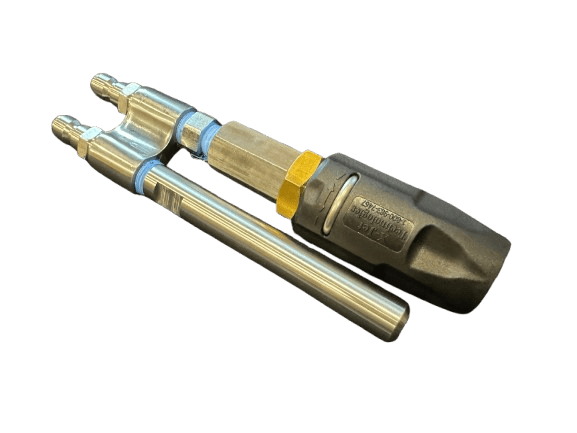
The spray gun is what you actually hold and aim. Combined with the pump, it lets you apply solution at low pressure with enough reach to hit roofs and upper walls from a safe position on the ground.
Different nozzle tips adjust your spray pattern and distance—a wider fan for broad wall coverage, a tighter stream for reaching high roof peaks. Having a few nozzle options gives you control across different job types.
The convenient thing for beginners is that you don't have to source all these parts separately and hope they're compatible. Complete starter systems bundle a properly sized tank, a matched pump, a hose reel, and a spray gun into one ready-to-use package.
The Batch 45™ Softwash System is a good example of this all-in-one approach: it pairs a 45-gallon tank, a Super 8 pump, a hose reel, and a spray gun in rugged PolyPro™ construction. For someone who doesn't want to guess whether their pump matches their tank or whether their hose will survive the chemicals, a pre-matched system removes the guesswork entirely.
Equipment is only half the equation. The chemistry is what actually cleans, and getting your mix right separates professional results from streaky disappointment.
The core soft wash solution has three ingredients:
Sodium hypochlorite (SH). This is the active ingredient—essentially concentrated bleach. Pool-grade or "12.5%" sodium hypochlorite from a pool supply store is the industry standard. It's far stronger than household bleach, which tops out around 6%. Sodium hypochlorite kills algae, mold, mildew, and bacteria on contact.
Water. You dilute the SH with water to reach the right strength for the surface you're cleaning. Roofs and heavy organic growth need a stronger mix; delicate siding needs a gentler one.
A surfactant. This is a soap or "surfactant" additive that helps the solution cling to vertical surfaces instead of running straight off, extends dwell time, and often includes a masking scent to cut the bleach smell. Without a surfactant, your solution slides off the wall before it can work.
Mix ratios vary by job, but here are common professional starting points using 12.5% sodium hypochlorite:
House siding (vinyl, aluminum): roughly a 1:4 to 1:6 ratio of SH to water—a lighter mix that cleans without risk to plants or paint.
Roofs (asphalt shingles): a stronger mix, often around 1:1 to 1:3, because roof algae (that black streaking) is stubborn and shingles tolerate the chemistry well.
Concrete and heavy mildew: adjust stronger as needed, always testing a small area first.
Always test a small, inconspicuous spot before treating an entire surface, and adjust your ratio based on results.
This is a critical safety and quality question that too many beginners overlook.
On most vertical surfaces like siding, the standard professional practice is to apply the solution, let it dwell and do its work, and then rinse. If you leave concentrated sodium hypochlorite on a surface without rinsing, several problems can follow:
Surface damage and discoloration. Prolonged contact can bleach or fade paint, stain surfaces, and leave white residue or streaks as it dries.
Plant and landscaping damage. Sodium hypochlorite kills vegetation. If it dries on shrubs, grass, or flower beds instead of being rinsed and diluted, you'll leave brown, dead patches behind—a fast way to lose a customer.
Corrosion. Left on metal fixtures, gutters, fasteners, and outdoor hardware, it can accelerate corrosion.
The professional rule: always pre-wet nearby landscaping before you start, keep plants damp throughout the job, and rinse them thoroughly afterward. On surfaces, follow the treatment approach appropriate to the material—rinse siding and hardscapes, and for roofs, many pros allow the solution and subsequent rain to clear the treated growth over the following days, but you must still protect gutters, downspouts, and everything below.
Never let the chemical dry on surfaces it can damage. Rinsing isn't an optional last step—it's part of doing the job correctly.
A quick note on safety gear: sodium hypochlorite is caustic. Always wear eye protection, chemical-resistant gloves, and clothing you don't mind ruining. Protect yourself as seriously as you protect the property.
Now to the question that brought you here: which system should a beginner actually buy?
The best beginner system balances four things—capacity, portability, durability, and price—without forcing you to overpay for commercial capacity you won't use yet.
Soft wash systems generally fall into three categories:
Backpack and handheld sprayers. These are the smallest and cheapest option—a few gallons of capacity you carry on your back or by hand. They work for tiny jobs and spot treatments but lack the reach, volume, and consistency for whole houses or roofs. Fine for a homeowner touching up a small area; inadequate for anyone doing real work.
Compact tank systems (30–60 gallons). This is the ideal beginner category. These systems mount a mid-sized tank, a chemical pump, a hose reel, and a spray gun on a compact frame or skid. They're portable enough to move and transport, powerful enough to handle full residential jobs, and priced within reach of someone just starting out. A 45-gallon system sits right in the heart of this range.
Large commercial skids (100–300+ gallons). These are built for full-time crews doing multiple large jobs daily. They're expensive, heavy, and require a dedicated trailer or truck setup. For a beginner, this is far more system than you need—and a large upfront cost that's hard to justify before you have steady work.
The literal cheapest option is a pump-up or backpack sprayer, which you can buy for well under a hundred dollars. But "cheapest" and "best value" are not the same thing.
A backpack sprayer that can't complete a paying job, can't reach a second story, and can't deliver consistent results isn't a bargain—it's a purchase you'll outgrow immediately and have to replace. The real cost includes the jobs you can't take and the do-overs from poor performance.
The smarter way to think about cost is cost per capability. You want the least expensive system that can actually handle the work you intend to do. For most beginners, that means a compact 45-gallon system with a proper chemical pump—enough machine to clean a house or roof reliably, without the price tag of a commercial skid.
The Batch 45™ Softwash System was designed around exactly this logic. It's budget-friendly relative to large commercial rigs, but it doesn't cut the corners that leave you stranded. The rugged PolyPro™ construction means it holds up to chemical exposure and daily use, the 45-gallon capacity handles most residential jobs in a single fill, and the included Super 8 pump gives you the reach and flow to work efficiently from the ground. For a beginner, it's the sweet spot between too-cheap-to-work and too-expensive-to-justify.
If part of your goal is also cleaning driveways and concrete, you'll eventually want a pressure washer alongside your soft wash system. For a beginner, the best pressure washer is a mid-range gas unit in the 3,000–3,300 PSI range with 2.5–2.8 GPM (gallons per minute) flow—enough power for real cleaning without jumping to expensive commercial machines.
For lighter home use, a compact electric pressure washer in the 1,800–2,200 PSI range is often the best fit. It's quieter, lighter, requires no fuel or oil maintenance, and easily handles patios, cars, outdoor furniture, and light driveway cleaning around the house.
Just remember the core lesson from earlier: a pressure washer and a soft wash system do different jobs. Don't buy a pressure washer expecting it to soft wash your roof safely, and don't expect a soft wash system to blast a dirty driveway. They complement each other.
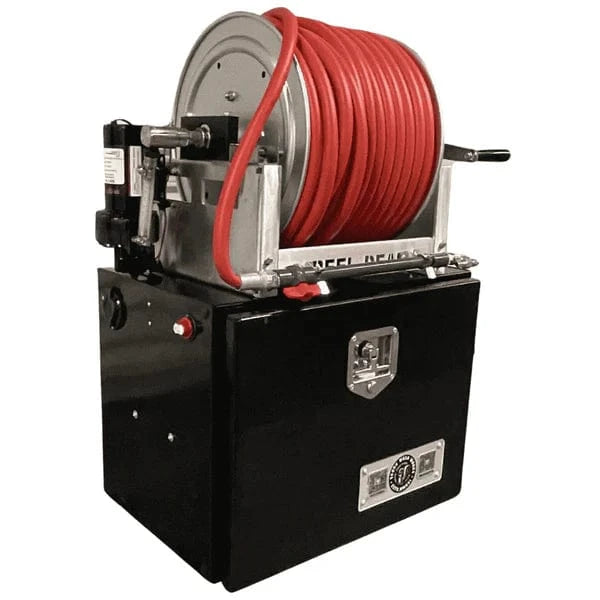
Introducing the 45 Gal Batch tank soft-wash system from SESW!
Are you new to the soft-wash game, and looking for a way to get started on a budget? Look no further than this simple, easy to use solution. Made of extremely tough PolyPro™ construction, this is a drop-in answer to get you off the ground ASAP.
Simply add your 24v power supply (as easy as 2 deep cycle 12v batteries) and start cleaning today. Just like your favorite .45 cal 1911, the 45gal capacity can hold its own against almost any job you come across.
Unit comes with a 45 gallon tank, Super 8 soft-wash pump, hose, trigger gun, and REEL DEAL hose reel.
Even with the right equipment, beginners tend to make the same avoidable errors. Learn these now and save yourself the frustration.
Using a pressure washer where soft washing is required. The single most damaging mistake is blasting vinyl siding, roofs, or wood with high pressure. You'll strip paint, crack shingles, and drive water where it doesn't belong. If the surface is delicate or the stain is organic, soft wash it.
Guessing at chemical ratios. Too weak and you'll get poor, streaky results and blame your equipment. Too strong and you risk surface damage and dead landscaping. Measure your mix, keep notes on what works for each surface, and test an inconspicuous area first.
Ignoring landscaping. Failing to pre-wet, protect, and rinse plants is the fastest way to leave dead shrubs and an angry customer behind. Always wet vegetation before, during, and after applying solution.
Letting sodium hypochlorite dry on surfaces. As covered above, dried SH causes streaking, discoloration, and corrosion. Rinse appropriately and don't walk away from the job half-finished.
Buying the cheapest possible equipment. A backpack sprayer or an incompatible mix of parts feels economical until it fails mid-job. Under-buying costs more in the long run through replacements, lost jobs, and poor results. Buy a properly matched system sized to your actual work.
Running chemicals through a pump not rated for them. Sodium hypochlorite destroys pumps and seals that aren't chemical-resistant. Use a purpose-built soft wash pump, not a repurposed utility pump or your pressure washer's internals.
Skipping personal protective equipment. Bleach in your eyes or on your skin is a painful, avoidable injury. Gloves and eye protection are cheap insurance—wear them every time.
Overfilling your schedule before mastering technique. New operators sometimes book heavily before they've dialed in mix ratios, dwell times, and spray patterns. Start with a few jobs, refine your process, then scale.
These are the habits and techniques that separate polished professionals from people who bought a system and hoped for the best.
Work top to bottom. Always start at the highest point and let solution run down. This prevents streaking and ensures even coverage as gravity carries the mix over lower surfaces.
Respect dwell time. The solution needs time to work—usually several minutes. Rushing to rinse before the chemistry has done its job leaves growth behind. Watch the surface; you'll often see algae and mildew visibly fading as the solution dwells.
Choose your weather. Overcast, mild days are ideal. Hot sun dries solution too fast, reducing dwell time and increasing streaking risk. Avoid windy days entirely—overspray drifts onto cars, neighbors' property, and landscaping you meant to protect.
Use a surfactant every time. It's not optional for quality work. A good surfactant keeps solution clinging to vertical surfaces, extends contact time, and masks the bleach odor—all of which improve results and customer satisfaction.
Keep your equipment flushed and maintained. After each job, run clean water through your pump, hose, and gun to clear out residual sodium hypochlorite. This simple habit dramatically extends the life of every component, especially the pump. A well-maintained Super 8 pump and PolyPro™ tank will serve you for years if you flush them consistently.
Master reach from the ground. A big advantage of a quality pump-driven system is applying solution to roofs and second stories without climbing. Fewer ladders means faster jobs and far fewer accidents. Learn the reach of your system and position yourself to work safely.
Pre-mix in the tank, not the hose. A dedicated batch system lets you mix a precise, consistent solution in the tank so every square foot gets the same treatment—unlike downstream injection, which varies constantly. Consistency is what produces professional, repeatable results.
Batch your solution to the job. Mix roughly the amount you'll need for the job at hand. A 45-gallon tank is ideal for this—large enough to complete most residential work in one fill, small enough that you're not hauling and storing excessive leftover chemical.
Track your results. Keep a simple log of surface type, mix ratio, dwell time, and outcome. Within a handful of jobs you'll have your own dialed-in playbook that makes every future job faster and more predictable.
Everything covered in this guide points to the same core challenge for beginners: you need a system powerful enough to do real work, chemical-resistant enough to survive sodium hypochlorite, portable enough to transport easily, and affordable enough to justify before you have a full client base. Most options fail at least one of those tests.
Backpack sprayers are cheap but can't handle full houses or reach roofs. Large commercial skids do everything but cost too much and take up too much space for someone just starting. Cobbling together mismatched parts risks incompatibility and pump failure. The gap in the middle—capable, durable, portable, and affordable—is exactly where the Batch 45™ Softwash System lives.
Here's how it addresses each challenge directly:
Capacity that matches real jobs. The 45-gallon tank completes most residential roofs and full-house siding jobs in a single fill, so you're not constantly stopping to remix and refill.
A pump built for the work. The included Super 8 pump delivers the flow and reach to treat second stories and roofs from the ground—faster, safer, and more consistent than downstream injection through a pressure washer.
Durability where it counts. Rugged PolyPro™ construction resists chemical breakdown from sodium hypochlorite, so the system holds up to daily use instead of cracking or degrading like cheaper materials.
A complete, matched setup. Tank, pump, hose reel, and spray gun come ready to work together. You skip the guesswork of sourcing compatible parts and the risk of running chemicals through gear that can't handle them.
Beginner-friendly price. It's positioned as a budget-conscious entry point—far less than a commercial skid—without the compromises that make ultra-cheap sprayers a dead end.
Compared to the common alternatives, it avoids both extremes: it's more capable and durable than a bargain backpack sprayer, and far more practical and affordable than an oversized commercial rig.
Who should buy it? New soft wash contractors, handymen adding a profitable service, and serious homeowners with a multi-story house and recurring cleaning needs. If you want one dependable system that handles the majority of residential soft wash work without a steep investment, this is built for you.
Who might not need it? If you only need to spot-clean a small single-story area once in a while, a simple pump sprayer may be enough. And if you're already running a high-volume commercial operation with multiple crews doing large jobs daily, you'll eventually want higher-capacity equipment. For nearly everyone in between—especially anyone starting out—the Batch 45™ is the practical choice.
To get the most from it: mix your solution to the surface, flush the system with clean water after every job, protect and rinse landscaping, and use the pump's reach to stay off ladders. Follow those practices and this system will handle years of profitable work.
Starting in soft washing doesn't require a garage full of equipment or a five-figure investment. It requires understanding a few fundamentals and matching them to the right tools.
Remember the core lessons: soft washing uses chemistry, not force, and it's the correct method for roofs, siding, and any organic staining—while pressure washing stays reserved for concrete and durable hardscapes. A proper soft wash setup needs a chemical-resistant tank, a purpose-built pump, a hose reel, and a spray gun, ideally sized around 45 gallons for beginner-friendly capacity. Your cleaning solution is sodium hypochlorite, water, and a surfactant, mixed to the surface and always rinsed appropriately to protect surfaces, hardware, and landscaping.
Avoid the beginner traps—guessing at ratios, neglecting plants, letting chemicals dry, and under-buying equipment—and adopt the professional habits of working top to bottom, respecting dwell time, choosing calm weather, and flushing your gear after every job.
If you want a single, dependable system that checks every box for a beginner—capable, durable, portable, and affordable—the Batch 45™ Softwash System is the logical starting point. Buy the right equipment once, learn the fundamentals well, and you'll be delivering professional-quality results from your very first job.