



How to Organize a Soft Wash Pump System the Right Way
|
|
Time to read 17 min
|
|
Time to read 17 min
A disorganized soft wash rig costs you money every single day. Tangled wiring, leaking fittings, corroded battery terminals, and a pump buried under a pile of hose—these aren't just annoyances. They slow down your jobs, shorten the life of your equipment, and eventually leave you stranded on a driveway with a customer waiting.
Organizing a soft wash pump system the right way is what separates a reliable, professional operation from a weekend patch job that fails when you need it most. This guide walks you through exactly how a soft wash system works, what equipment and chemicals you need, and—most importantly—how to lay out, plumb, and wire your pump system so it runs clean, safe, and dependable for years.
Whether you're building your first rig or rebuilding one that's become a mess, you'll leave with a clear plan you can put into action.
Soft washing is a low-pressure cleaning method that relies on chemistry rather than force. Instead of blasting surfaces with high-pressure water, a soft wash system applies a diluted cleaning solution—usually sodium hypochlorite (bleach), a surfactant, and water—that kills organic growth like algae, mold, mildew, and bacteria at the root.
The mechanics are straightforward. A pump draws cleaning solution from a mix tank, pressurizes it to a low level, and pushes it through a hose to a spray nozzle or application gun. The solution clings to the surface, dwells for several minutes to break down contaminants, and then gets rinsed away. The growth doesn't just get knocked off—it gets chemically eliminated, which is why soft-washed surfaces stay clean far longer.
This is the key advantage over mechanical cleaning. High pressure removes the visible layer of algae, but it leaves spores behind that regrow within months. Soft washing kills the organism, so results can last a year or more.
Neither method is universally "better"—they solve different problems, and a smart operator uses both.
Pressure washing uses high-pressure water (often 2,000–4,000 PSI) to physically strip dirt, grime, and buildup off hard surfaces. It's ideal for concrete driveways, sidewalks, patios, and heavy-duty surface prep where mechanical force won't cause damage.
Soft washing uses low pressure and cleaning chemistry to treat delicate or organically contaminated surfaces. It's the right choice for roofs, vinyl siding, stucco, screen enclosures, painted surfaces, and anything that high pressure would gouge, etch, or force water behind.
Put simply: if the surface can take a beating and just needs grime removed, pressure wash it. If the surface is fragile or covered in living growth, soft wash it. Using high pressure on an asphalt shingle roof, for example, will void the manufacturer's warranty and strip away the protective granules—an expensive mistake that soft washing avoids entirely.
Most professional cleaning businesses run both capabilities, which is exactly why organizing your equipment matters so much. We'll cover that in detail below.
This is where soft washing earns its name. A true soft wash system operates at roughly 40 to 100 PSI—dramatically lower than a pressure washer.
For comparison, a garden hose runs around 40–60 PSI. Most dedicated soft wash pumps deliver flow in the range of 5.5 GPM at about 100 PSI or less. That low pressure is intentional: it lets you apply solution gently, reach up to a second-story roofline without over-atomizing the chemical into a fine, drifting mist, and protect surfaces that can't tolerate force.
The goal of a soft wash pump isn't pressure—it's reach and even application. You want enough push to send solution 30+ feet up to a roof peak while keeping the droplet size large enough to land where you aim it. Chasing high PSI in a soft wash setup is counterproductive; it damages surfaces and wastes chemical to overspray.
A functional soft wash system comes down to a handful of core components. Understanding each one is the foundation for organizing them well.
The pump. The heart of the system. Most soft wash rigs use a 12-volt diaphragm pump rated around 5.5 GPM. These pumps are chemical-resistant, self-priming, and built to handle the corrosive sodium hypochlorite solutions that would destroy a standard pressure washer pump.
The power source. A deep-cycle 12V battery powers the pump. Many operators run dual batteries for longer runtime, along with an onboard charger or a smart charging system to keep them topped up between jobs.
Mix and solution tanks. You'll need a chemical-resistant tank (typically 55 to 100+ gallons) to hold your diluted cleaning solution, often with smaller tanks for concentrated chemicals and water for blending on the fly.
Plumbing and fittings. Chemical-proof hoses, valves, and fittings connect the tank to the pump and the pump to your application hose. This is where most homemade systems fail—more on that shortly.
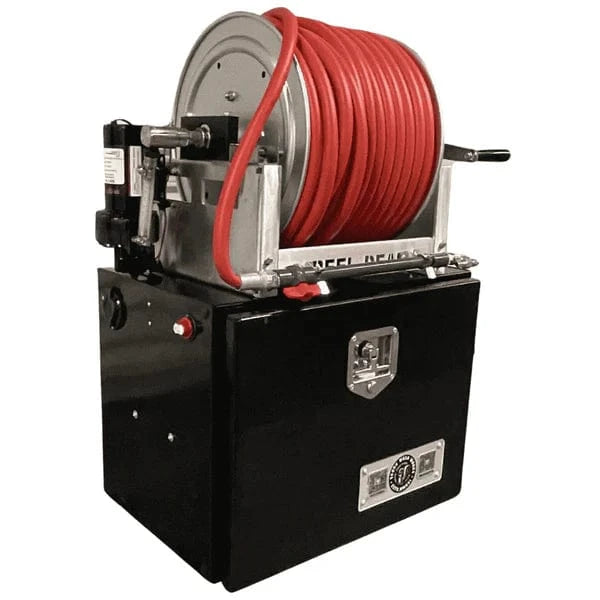
Hose reel and application hose. A quality reel keeps 100–300 feet of soft wash hose organized and protected. Long hose runs let you reach rooflines and second stories from the ground.
Spray gun, wand, and nozzles. The business end. Adjustable nozzles let you switch between a tight stream for distance and a fan pattern for even coverage.
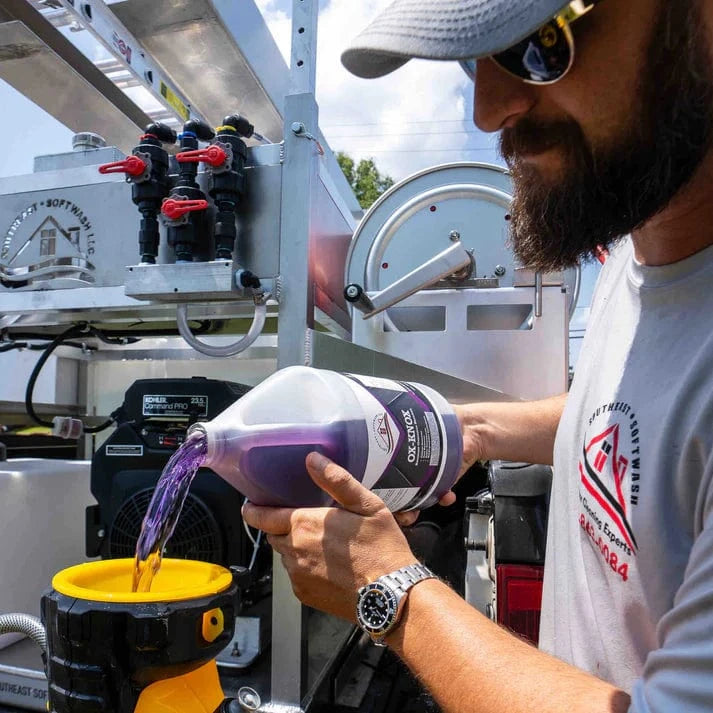
Chemicals. Sodium hypochlorite, a surfactant to help the solution cling, and optional additives like odor maskers or mold inhibitors.
The equipment list is manageable. The challenge—and the reason so many DIY systems become a mess—is assembling these parts into a clean, protected, organized layout. A pile of components thrown into a truck bed is technically a "system," but it won't last.
Chemistry is what makes soft washing work, so getting your mix right is essential.
The primary cleaning agent is sodium hypochlorite (SH), the same active ingredient found in household bleach but purchased at higher concentrations (typically 12.5%) from pool supply or janitorial suppliers. SH kills algae, mold, mildew, moss, and bacteria on contact.
Your working solution is diluted based on the surface and the severity of growth:
Roofs: roughly 3–4% SH (a stronger mix for heavy organic growth)
Vinyl siding: roughly 1–2% SH (gentler to protect the surface and surrounding landscaping)
Concrete and heavily soiled surfaces: can go stronger as needed
To reach these concentrations, you dilute 12.5% SH with water. For example, mixing equal parts 12.5% SH and water yields roughly 6% solution; further dilution brings it down to siding-safe levels.
Two additives dramatically improve results:
Surfactant ("soap") thickens the solution so it clings to vertical surfaces and dwells longer instead of running off. This is non-negotiable for roof and siding work.
Odor maskers cover the strong bleach smell, which customers appreciate.
If you're looking for a good DIY soft wash solution for a pressure washer (using a downstream injector, which we'll cover), a common starter mix is one part 12.5% sodium hypochlorite to a small amount of surfactant, injected and further diluted by the machine's water flow. Always test on a small, hidden area first.
A few safety essentials: sodium hypochlorite is corrosive. Wear chemical-resistant gloves, eye protection, and appropriate clothing. Pre-wet and rinse surrounding plants, because concentrated SH will burn vegetation. And never mix SH with acids or ammonia-based products—doing so releases toxic gas.
Now for the heart of this guide. Setting up a soft wash system isn't just connecting parts—it's building a layout that's clean, protected, serviceable, and safe. Here's how to organize your pump system the right way.
The single biggest factor in a reliable rig is planning the physical layout before you connect anything. Sketch where each component sits: pump, battery, charger, plumbing manifold, and how they connect to your tank and hose reel.
Group components by function and keep the wet side (plumbing) separated from the dry side (electrical). Water and 12V electrical connections don't mix, and corrosion from chemical splash is the number one killer of soft wash wiring. Give yourself room to reach fittings and terminals for maintenance—burying your pump in an inaccessible corner guarantees frustration later.
Plumbing is where homemade systems most often fail. Sodium hypochlorite is aggressive, and every fitting, valve, and hose in the chemical path must be 100% chemical-proof. Using standard brass or non-resistant plastic fittings is a false economy—they corrode, crack, and leak within weeks.
Run your plumbing in the shortest logical path from tank to pump to output. Keep runs straight where possible, support the lines so they aren't hanging on the pump's ports, and use proper strain relief. Install a strainer or filter on the suction side to keep debris out of the pump—diaphragm pumps hate grit.
Every connection should be snug and, ideally, accessible. A leaking fitting that drips onto your battery terminals will corrode them fast. Clean plumbing isn't just about aesthetics; it's about keeping chemical away from everything it can destroy.
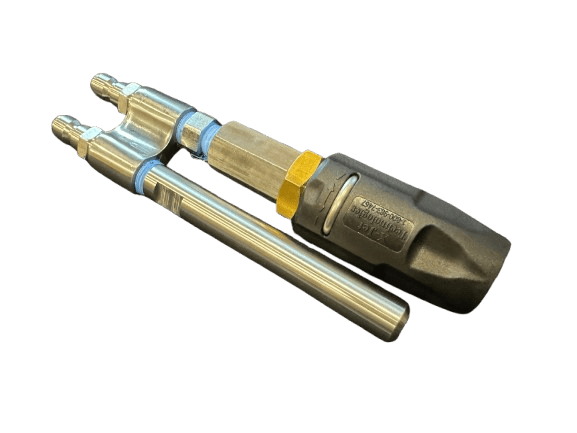
This is exactly the problem an integrated solution like the PUMP POD is built to solve. Instead of assembling loose fittings and hoping they hold, the PUMP POD delivers organized, chemical-proof plumbing already routed and protected, so leaks and corrosion don't take your rig out of service.
Your pump runs on 12V power, and the wiring needs to be as organized as the plumbing. Loose, unprotected wires are a common failure point—they chafe, corrode, and short out.
Use appropriately gauged wire for the pump's amperage draw, keep runs tidy and secured, and protect the circuit with an inline fuse or breaker. Keep battery terminals clean and elevated away from any potential chemical splash. Route wiring away from the plumbing path so a plumbing leak can't reach it.
If you run an onboard charger, mount it where it stays dry and ventilated, and wire it so you can top off your batteries between jobs without disassembling anything. Organized wiring means faster troubleshooting and far fewer roadside failures.
Soft wash equipment lives a hard life—bouncing in a truck bed, exposed to sun, rain, road grime, and chemical fumes. Unprotected pumps, batteries, and chargers degrade quickly.
Enclosing and protecting your core components extends their life dramatically. Shielding the pump and electrical from UV, moisture, and chemical vapor prevents the slow degradation that kills unprotected rigs. This is another area where an all-in-one housing pays for itself: the PUMP POD's rugged polymer construction protects the pump, batteries, and charging system as a single unit, so the components you depend on aren't exposed to the environment that destroys them.
Before your first job, run the system with plain water to check for leaks, verify pump priming, and confirm proper pressure at the nozzle. Label your valves and chemical lines so anyone on your crew can operate the rig safely.
A ten-minute test after any modification saves hours of troubleshooting in the field. Professionals treat setup as an ongoing discipline, not a one-time event.
Introducing the PUMP POD, the all in 1 drop in soft-wash pumping solution from the team at SESW. Does your wiring look like its part of the Griswold Christmas display? Does your plumbing look like spaghetti junction in Atlanta traffic during rush hour?
If you are looking for a clean, simple pump install, look no further than the PUMP-POD!
The tough polymer construction (100% chemical proof) not only provides for a easy install, but will keep your pump, batteries, and charging system out of the elements for years to come. Rugged, and Refined, the PUMP-POD is the go-to solution for getting a great looking, high performance softwash system and an install easier than ever.
Plenty of operators want to build their own system, and it's absolutely doable. The question is whether you build from individual components or convert existing equipment—and which path actually saves you money.
A true soft wash system starts with a chemical-resistant 12V diaphragm pump, a deep-cycle battery, chemical-proof plumbing, a solution tank, a hose reel, and an application gun. You source each component, mount them, plumb them, and wire them together following the layout principles above.
The advantage of a dedicated system is that it's purpose-built for low-pressure chemical application. It handles sodium hypochlorite without complaint, gives you precise control over flow, and reaches rooflines cleanly.
The downside of the fully DIY route is time and integration risk. Sourcing compatible parts, cutting hose, wiring fuses, and mounting everything so it survives real-world use takes significant effort—and mistakes in plumbing or wiring lead to the leaks and corrosion we've already discussed. Many operators underestimate how much a disorganized homemade rig costs them in downtime.
Yes—to a point. You can add soft wash capability to a pressure washer using a downstream injector, and this is one of the most common entry points into soft washing.
A downstream injector installs on the low-pressure side of your pressure washer, after the pump. When you switch to a low-pressure (soft wash) nozzle, the injector draws cleaning solution from a chemical tank and blends it into the water stream. Switch back to a high-pressure nozzle and the injector stops drawing, letting you rinse at full pressure.
This approach is affordable and works well for occasional roof and siding cleaning. It's the practical answer to "can I turn my pressure washer into a soft wash system"—the injector is inexpensive, and if you already own a pressure washer, you're mostly there.
But there are real limits. Downstream injection dilutes your solution heavily (often 10:1 or more), so you get a weaker mix that's less effective on heavy growth. Your reach is limited compared to a dedicated 12V pump, and running corrosive SH through a machine not designed for it accelerates wear on seals and components.
For homeowners or businesses doing light, occasional work, a pressure washer with a downstream injector is a sensible start. For anyone cleaning roofs regularly or running a growing business, a dedicated 12V soft wash pump system delivers stronger mixes, better reach, and equipment that's actually built for the chemistry.
The "best" soft wash system is the one that's reliable, chemical-proof, properly organized, and matched to your workload. Raw pump specs matter less than how well the entire system is built and protected—because a powerful pump surrounded by leaking fittings and corroded wiring is a system that fails.
Evaluate any soft wash system against these criteria:
Chemical resistance. Every component in the chemical path must tolerate sodium hypochlorite indefinitely. This is the number one differentiator between systems that last and systems that don't.
Organization and integration. Clean plumbing and tidy wiring aren't luxuries—they determine how often your rig breaks down and how fast you can fix it when it does.
Protection. Is the pump, battery, and charging system shielded from weather, UV, and chemical exposure? Exposed components have short lives.
Serviceability. Can you reach fittings, terminals, and the pump for maintenance without dismantling the whole rig?
Ease of installation. How quickly can you get it running and mounted in your truck or trailer?
This is precisely why integrated, purpose-built solutions have become popular among serious operators. A system like the PUMP POD scores well across every one of these criteria because it's engineered as a complete unit—organized plumbing, managed wiring, chemical-proof polymer construction, and built-in protection for the pump, batteries, and charger. Rather than being the "most powerful" system, it's built to be the most reliable and the easiest to deploy, which is what actually matters over the life of a business.
Even experienced operators make these mistakes. Avoiding them will save you money, downtime, and frustration.
These are the practices that separate seasoned operators from beginners.
Everything in this guide points to a single truth: the hardest part of a soft wash system isn't the pump itself—it's organizing, protecting, and integrating everything around it. The leaks, the corroded terminals, the exposed batteries, the tangled wiring, and the failed fittings are what actually cost operators time and money. Solve those problems and you have a rig that runs reliably for years.
That's exactly what the PUMP POD is designed to do. It's an all-in-one soft wash pumping solution that takes the messiest, most failure-prone parts of a build and handles them for you.
Its clean, organized plumbing eliminates the leaking, corroding fittings that plague homemade systems. Its managed wiring keeps your electrical tidy and separated from the chemical side, so corrosion and shorts don't take you off a job. And its 100% chemical-proof polymer construction stands up to sodium hypochlorite indefinitely—no more replacing parts that dissolved after a few months.
Just as importantly, the PUMP POD protects your pump, batteries, and charging system from the elements. The UV, moisture, and chemical exposure that slowly kill an open, exposed rig can't reach the components you depend on. It arrives as a compact, easy-to-install package, which means less time sourcing and assembling parts and more time earning revenue.
Compared to a loose pile of individually sourced components, the advantage is integration and reliability. A DIY build can technically match the specs, but it can't easily match the organized plumbing, protected wiring, and rugged enclosure without significant time, expertise, and trial-and-error. And compared to a downstream-injector-on-a-pressure-washer setup, a dedicated protected pump system delivers stronger mixes, better reach, and equipment actually built for the chemistry.
Who should use it? Anyone building or rebuilding a soft wash rig who values reliability and wants professional performance without engineering the whole thing from scratch. If you clean roofs and siding regularly, run a growing exterior cleaning business, or you're tired of chasing leaks and corrosion, the PUMP POD is built for you.
Who might not need it? If you're a homeowner cleaning your own siding once or twice a year, a pressure washer with an inexpensive downstream injector will likely meet your needs. The PUMP POD is designed for those who need a dependable, organized, purpose-built system they can rely on day after day.
To get the most from it, mount it with maintenance access in mind, keep your batteries topped with the charging system, use chemical-proof hose throughout the rest of your rig, and follow the mixing and application best practices covered above. Integrated hardware plus disciplined technique is the combination that produces consistently professional results.
Organizing a soft wash pump system well is what turns unreliable equipment into a professional operation. The fundamentals are clear: understand that soft washing cleans through chemistry at low pressure (40–100 PSI) rather than force, match the method to the surface, and use the right sodium hypochlorite concentration with a surfactant for each job.
The setup itself comes down to disciplined organization—plan your layout, plumb cleanly with 100% chemical-proof components, wire the electrical side safely and separately, and protect your pump, batteries, and charger from the elements. Avoid the common mistakes of using cheap fittings, chasing high pressure, mixing wet and dry sides, and leaving components exposed. Then layer in professional habits like mixing to the surface, letting the chemistry dwell, and testing after every change.
You can absolutely build your own system, and a downstream injector on a pressure washer is a fine entry point for light work. But for a rig that stays reliable job after job, an integrated, protected, chemical-proof solution removes the exact failure points that sink homemade builds. The PUMP POD delivers that organized plumbing, managed wiring, and rugged protection in a single, easy-to-install package—so you can spend your time cleaning, not repairing.
Build it organized, protect it well, and run it with good technique, and your soft wash system will reward you with years of dependable performance.